
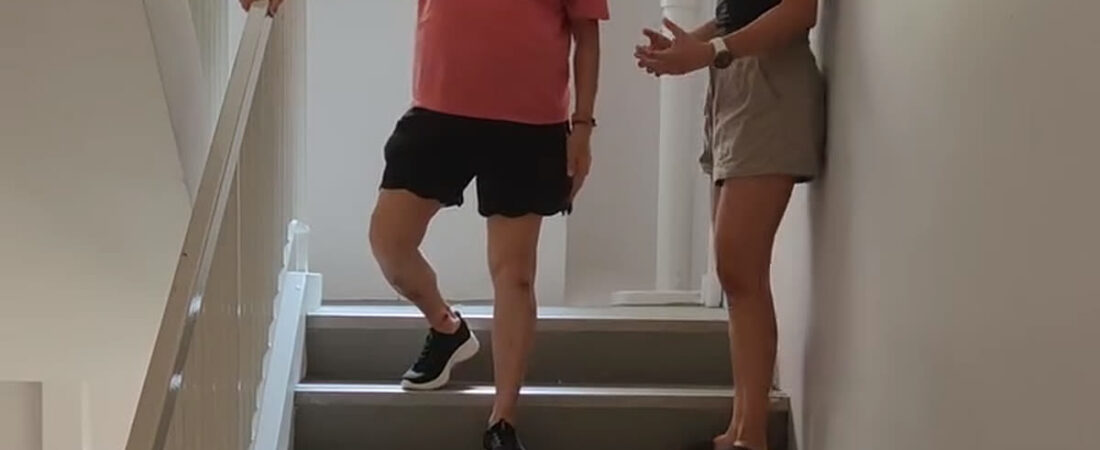
Stair safety for seniors comes down to three things: good technique, leg strength and steady balance. Face forward, keep one hand lightly on the railing, place your whole foot on each step, and lower yourself with control from the standing leg. Most seniors can learn this quickly, and with simple strength practice at home, stairs can feel easier again in a matter of weeks.
SilverFit is a Singapore-based active ageing company that helps seniors build strength, balance and confidence through its RE Method™. Stairs are one of the skills our coaches work on most, because in Singapore they’re everywhere: HDB staircases, MRT exits and overhead bridges.
Why do stairs get harder as we get older?
Going up asks a lot of your thigh and hip muscles. Coming down asks for control: one leg lowers your whole body weight while the other reaches for the next step. As strength and balance decline, many people turn sideways and grip the rail with both hands.
That caution is understandable. The World Health Organization reports that falls are the second leading cause of unintentional injury deaths worldwide, and adults over 60 suffer the greatest number of fatal falls. Stairs are a particular concern: in a 2025 UK study of 359 adults aged 55 and above, over half had experienced a stair fall, and 63% of those falls happened on the way down. Participants saw skill training, better lighting and extra handrails as the most acceptable ways to prevent them.
The good news: struggling on stairs is often less about being weak and more about never having been shown how.
How should seniors walk down stairs safely?
Practise on a short, well-lit flight with a sturdy handrail and someone beside you.
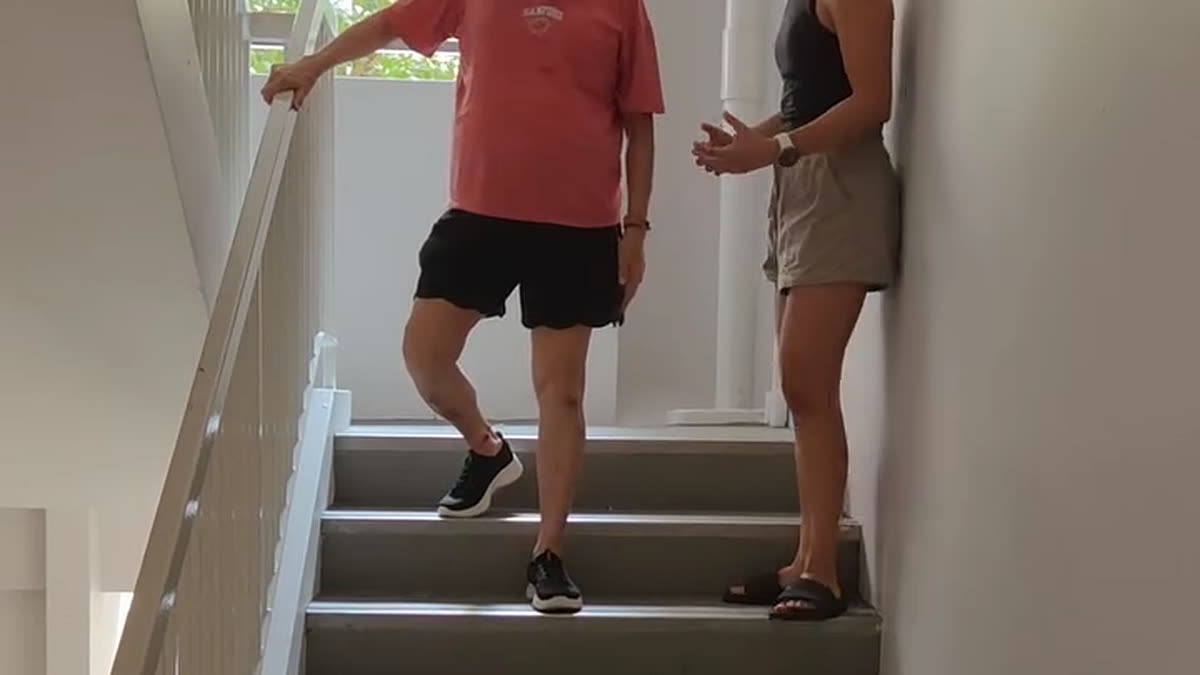
- Face forward. Stand tall at the top step with one hand resting on the railing.
- Hold the rail lightly. Slide your hand along as you go. It steadies you; it shouldn’t carry your weight.
- Lower with the standing leg. Bend the knee of the leg that stays on the step and let it lower you slowly, while the other foot reaches down.
- Place the whole foot. Land with your whole foot on the step, not just the heel or toes. Try to make each step as quiet as possible; a quiet landing means a controlled one.
- One step, one pause. Rest if your legs feel shaky, and stop if you feel pain or dizziness.
How can seniors climb stairs with less effort?
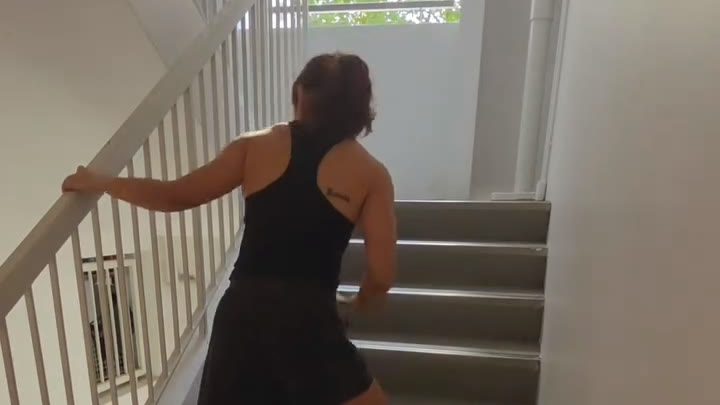
- Place your lead foot fully on the step above. Keep your hand on the railing.
- Shift your body weight forward over that front foot before you push.
- Push through the whole foot to stand up onto the step. Your back leg should feel light as it follows.
- Repeat, one step at a time. To rest, bring both feet onto one step and hold the rail. Stop if you feel pain or breathlessness.
Stair safety for seniors: simple exercises that help
Do these two or three times a week, building up gradually.
- Sit-to-stand (8–10 times): stand up from a sturdy chair without using your hands if you can, then sit back down slowly. Keep the chair against a wall so it can’t slide.
- Bottom-step step-ups (5–8 each leg): holding the handrail, step up onto the lowest step and back down. Use only the bottom step, and stop if your knee hurts.
- Heel raises (10 times): holding a kitchen counter or the back of a chair, rise onto your toes and lower slowly.
For more on why leg strength matters, read Muscle Loss After 60: How Seniors Can Stay Strong, and for balance habits at home, see 5 Simple Ways to Build Balance and Prevent Falls at Home.
Try a step challenge at the National Celebration of Seniors 2026
The Agency for Integrated Care’s National Celebration of Seniors 2026 runs on 30–31 October, 10am to 8pm, at HDB Hub in Toa Payoh, as listed by ActiveSG Circle on 3 October. Active Health’s Senior Fitness Challenge booth there features two stations, Step Up Strong and Quick Tap Balance, for exploring strength, balance and coordination: a good outing to bring a parent to.
How SilverFit approaches this
At SilverFit, our purpose is to help seniors age with strength, confidence and purpose: Strong at Every Age. Healthy ageing means moving confidently to the places that matter, and often that starts with the stairs outside your door. Stairs bring together all four pillars of the RE Method™:
- RE·BALANCE (Movement) is where we go deepest on stairs: weight placement, foot position and controlled lowering.
- RE·BUILD (Strength) builds the leg strength that lifts you up each step.
- RE·NEW (Mindset) helps you learn to trust your legs again, one successful step at a time.
- RE·STORE (Quality of Life) gives back the freedom to take the MRT or visit friends upstairs.
We break the movement into small pieces. In one recent session, a senior who came down the stairs sideways, gripping the rail with both hands, was walking down facing forward with one hand barely on the rail just minutes later.
In the SilverFit RE Programme™, we start with an assessment of your strength, balance and mobility, then coach skills like this through the 8-Week RE Programme™, one-to-one, in small groups or at home. Partners can bring this training to seniors through our Active Ageing Solutions for Active Ageing Centres and community clubs. More guides are on our blog.
Frequently asked questions
Is it better for seniors to go down stairs sideways?
For most people, facing forward with one hand on the railing is steadier, because you can see each step and keep your weight centred. After an injury or operation, follow your doctor’s or physiotherapist’s advice.
Should seniors avoid stairs to prevent falls?
Not usually. Avoiding stairs completely can let leg strength fade further. Learn safe technique, build strength, and keep stairs well lit, uncluttered and fitted with a sturdy handrail.
How long does it take to feel more confident on stairs?
Technique can improve within a single guided session, as soon as you know where to put your weight. Building the strength to make stairs feel easy usually takes a few weeks of regular practice.
My parent grips the railing with both hands. How can I help?
Walk beside them, encourage them to face forward and take their time, and keep the stairwell bright and clear. Guided practice with a coach can rebuild their technique and confidence.
A note on safety: always practise on stairs with a sturdy handrail, in good light, wearing well-fitting shoes, and with someone nearby the first few times. Stop if you feel pain, dizziness or unsteadiness. If you have a heart, joint or balance condition, or recent surgery, check with your doctor before starting new exercises. This article is general information, not personalised advice.
Want to feel steady on the stairs again?
Book a Coaching Call, explore the SilverFit RE Programme™, or WhatsApp us at +65 8996 5751.