
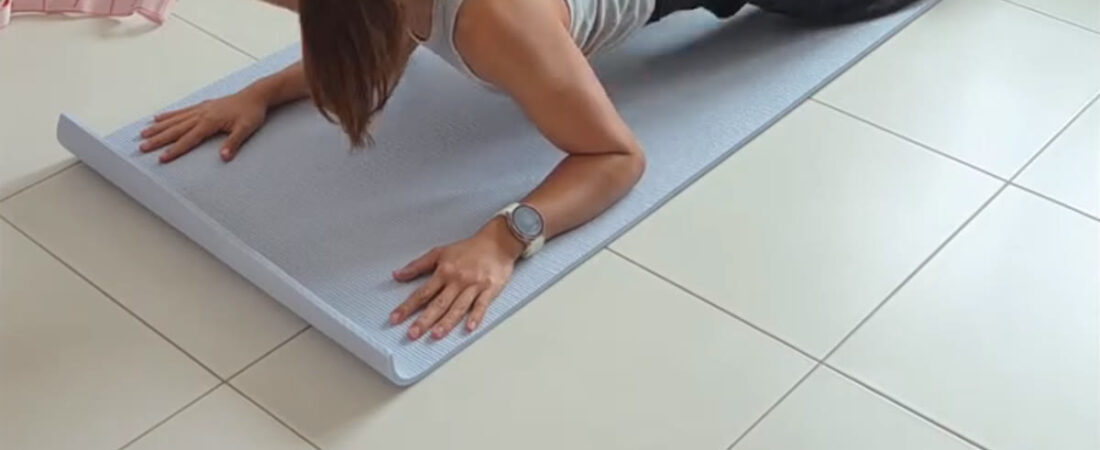
Most seniors can learn to get up from the floor safely — and practising it before a fall happens is one of the best ways to protect independence. The technique is simple: roll to your side, come onto your hands and knees, crawl to something sturdy, then rise one leg at a time. With guidance, even seniors who haven’t sat on the floor in years can learn it in a single session.
SilverFit is a Singapore-based active ageing company that helps seniors build strength, balance and confidence through its RE Method™. Getting up from the floor is one of the skills our coaches teach most often — because for many older adults, the floor has quietly become a place they’re afraid of.
Why is getting up from the floor so important for seniors?
Falls are common, and the consequences can be serious. The World Health Organization reports that falls are the second leading cause of unintentional injury deaths worldwide, and that adults over 60 suffer the greatest number of fatal falls. In the United States, the CDC estimates that more than one in four older people falls each year. Closer to home, Singapore’s Health Promotion Board has reported that about 8,000 seniors aged 65 and above were admitted to hospital each year because of falls (2016).
But the fall itself is only part of the story. What many seniors fear most is what comes after: lying on the floor, alone, not knowing how to get back up. The CDC notes that people who fall often become afraid of falling, and that this fear can lead them to cut down on everyday activities. They stop sitting on low surfaces, avoid playing with grandchildren on the floor, and plan their day around never being in a position where they might feel helpless.
Knowing how to get up changes that. It turns the floor from something to avoid into something you can handle.
How to get up from the floor safely: step by step
Practise this first on a soft mat, with someone beside you, and a sturdy chair or low table within reach.
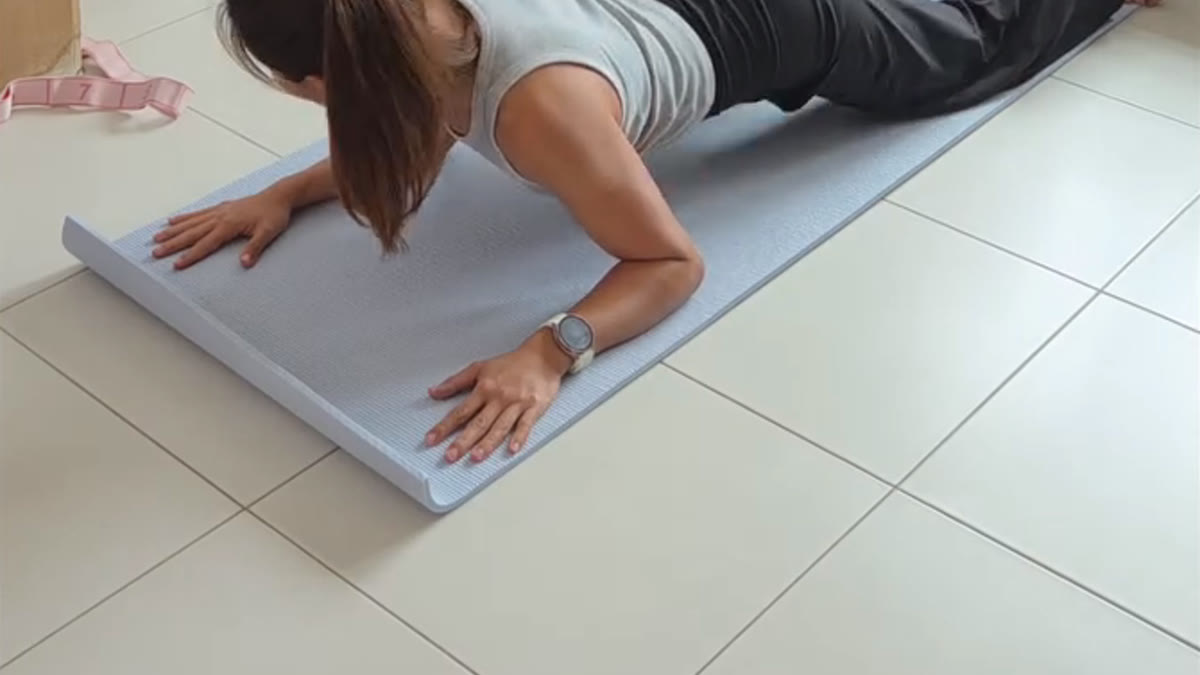
- Pause and check yourself. Take a few slow breaths. Notice whether anything hurts. If you feel sharp pain, dizziness, or can’t move a limb, don’t try to get up — call for help instead (see below).
- Roll onto your side, then your front. Bend your knees and roll gently. If you’re lying face down, place your hands flat on the floor beside your shoulders.
- Come onto your hands and knees. Push your chest up, then bring your hips back and your knees underneath you, one at a time. Rest here if you need to.
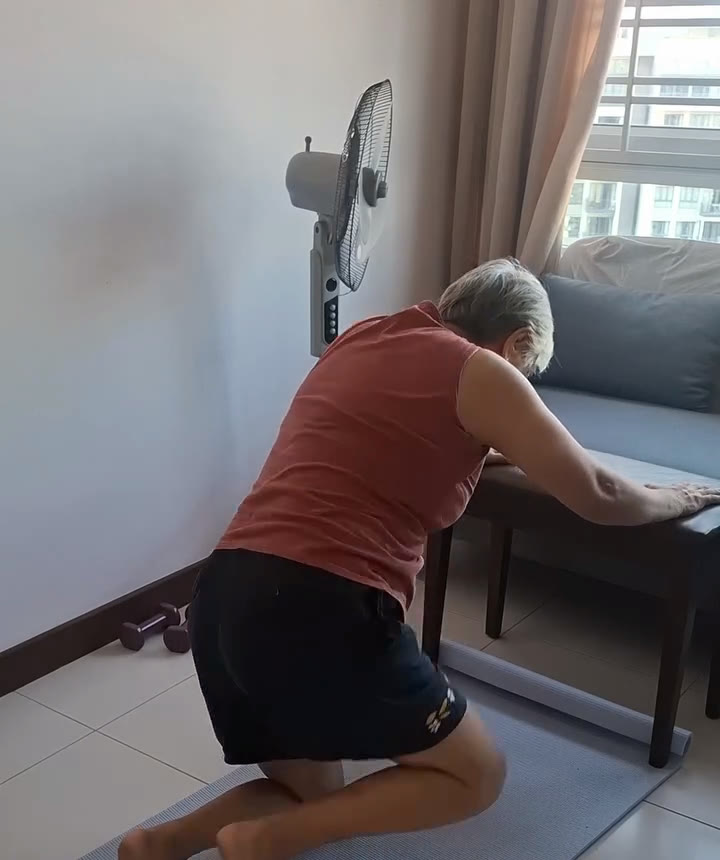
- Crawl to something sturdy. Move slowly towards a stable chair, sofa or low table — never something that might slide or tip, like a stool on wheels.
- Place both hands on the support. Keep your weight through your hands as you get ready to stand.
- Bring one foot forward. Step your stronger leg forward so its foot is flat on the floor, in a half-kneeling position.
- Push up and turn to sit. Push through your front leg and your hands to rise, then turn and sit down on the chair. Rest before you stand fully.
What if you can’t get up?
Sometimes the safest choice is to stay down. If you’re hurt, very dizzy, or simply too tired:
- Call for help — shout, bang on the floor, or use your phone or a personal alarm. Keeping your phone within reach at home, even when you move between rooms, makes a real difference.
- Stay warm — pull a cushion under your head and a blanket, towel or clothing over you.
- Keep moving gently — shift your position every so often to keep your circulation going.
Why practising matters more than knowing
Reading the steps is a start, but confidence comes from doing them. In one of our recent sessions, a 70-year-old participant was too afraid to even sit down on the mat in her first session. A few minutes of the right pointers later, she got up from the floor on her own for the first time — and the relief on her face said everything.
That’s the point of practising in a calm, guided setting: your body learns the movement, and your mind learns that you can do it. If a fall ever does happen, you’re far more likely to stay calm and remember what to do.
How SilverFit approaches this
Getting up from the floor brings together all four pillars of the RE Method™:
- RE·BUILD (Strength) — leg and arm strength to push yourself up, built through exercises like sit-to-stands and supported lunges.
- RE·BALANCE (Movement) — the control and coordination to move between positions safely.
- RE·NEW (Mindset) — replacing “I can’t” with “I know what to do”, one small step at a time.
- RE·STORE (Quality of Life) — the freedom to sit on the floor with your grandchildren again.
In the SilverFit RE Programme™, we start with an assessment of your strength, balance and mobility, then practise skills like this one at your pace — at home or in the gym. For more everyday balance habits, see 5 Simple Ways to Build Balance and Prevent Falls at Home, or read what happens in your first SilverFit session.
Frequently asked questions
Is it safe for seniors to practise getting up from the floor?
Yes, when it’s done carefully: on a soft mat, with a sturdy support nearby, and ideally with a coach or physiotherapist the first few times. If you have a recent joint replacement, osteoporosis or another health condition, check with your doctor first — some movements may need to be adapted.
What is the easiest way for an elderly person to get up from the floor?
For most people, it’s the “hands and knees to chair” method: roll to your side, come onto your hands and knees, crawl to a sturdy chair, then rise one leg at a time using the chair for support. It relies on your arms as well as your legs, so you don’t need a lot of leg strength to start.
How long does it take to learn?
Many seniors can get up with support in their first guided session. Becoming confident doing it on your own usually takes a few weeks of regular practice, alongside strength and balance training.
My parent is afraid of falling. How can I help?
Start by talking about it — fear of falling is common and nothing to be embarrassed about. Make home safer (clear loose rugs and cords, add lighting), keep a phone within reach, and consider guided training so your parent can build strength and practise getting up in a safe setting.
A note on safety: practise only on a soft surface with a sturdy support nearby, and stop if you feel pain or dizziness. This article is general information, not a substitute for advice from your doctor or a personalised assessment — which is exactly what the first session of the SilverFit RE Programme™ is for.
Want to practise getting up from the floor with a coach beside you?
Book a Coaching Call or WhatsApp us at +65 8996 5751.